Colorful Dream Color Font: A Chromatic Typeface for Expressive Design
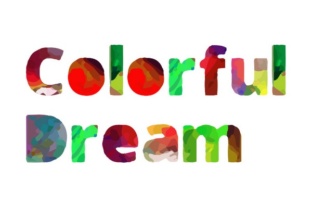
Colorful Dream Color Font stands apart in the crowded landscape of display typefaces—not because it’s louder or bolder, but because it’s fundamentally different in structure and intent. It’s a true color font, built using the OpenType-SVG format, where every glyph is a layered, multi-hued composition rather than a single-outline shape. Unlike traditional fonts that rely on external fills or effects, Colorful Dream embeds color data directly into each character. The result isn’t just “colored text”—it’s typographic illustration: a single letter may contain gradients, overlapping shapes, subtle shadows, and carefully balanced palettes, all rendered natively within compatible software.
What Makes Colorful Dream More Than Just a Pretty Font?
At its core, Colorful Dream Color Font is designed for visual impact without sacrificing typographic integrity. Each glyph functions like a miniature composition—think of the lowercase “a” not as a simple loop-and-stem, but as a hand-tuned arrangement of interlocking paths, each assigned a specific hue, opacity, and stroke behavior. This level of detail means the font doesn’t just sit on a page; it invites closer inspection. Designers who’ve used it report that clients often pause mid-review to point out how “alive” individual letters feel—especially at larger sizes or in motion graphics contexts.
The chromatic approach also shifts how hierarchy and emphasis work. Instead of relying solely on weight, size, or spacing, you can use color contrast *within* a word to guide attention. For example, in a headline like “Celebrate Joy,” the “J” and “Y” could carry brighter accents while supporting letters remain softer—creating rhythm without altering layout or font family.
Real-World Compatibility and Workflow Considerations
Colorful Dream Color Font works reliably in Adobe Photoshop (CC 2017+), Illustrator (CC 2018+), Silhouette Studio (v5.0+ with SVG support enabled), and Inkscape (v1.1+). These applications render the embedded SVG layers correctly, preserving both geometry and color fidelity. That said, compatibility isn’t universal—and this matters practically.
- No Cricut support: Neither the OTF nor TTF variants will function in Cricut Design Space. Attempts to install or use them there result in monochrome fallbacks or rendering failures. If your workflow includes cutting vinyl or paper crafts via Cricut, this font won’t integrate smoothly.
- Web use is limited: While technically possible with @font-face and SVG font embedding, browser support for OpenType-SVG remains inconsistent—especially in Safari and older Edge versions. For web projects requiring broad accessibility, exporting static SVGs per word or phrase is more reliable than live text rendering.
- No variable axes: Colorful Dream doesn’t offer optical sizing, weight variation, or slant controls. It’s a fixed-style chromatic font—intentionally so. That makes it less flexible for long-form editorial use but highly effective for short, high-impact applications like logos, social banners, packaging accents, or presentation slides.
Who Benefits Most—and When?
Colorful Dream Color Font serves best when the goal is immediate emotional resonance paired with strong brand distinction. Educators creating classroom posters have used it to turn vocabulary lists into visual anchors—students recall words faster when “sunshine” appears in warm yellows and soft oranges, or “ocean” in layered blues and teals. Small business owners launching seasonal campaigns (e.g., a summer farmers’ market logo or holiday gift guide) appreciate how little additional design effort is needed: type the word, adjust size, and the color story is already built in.
Freelance designers working across branding, social media, and print find it especially useful for mood boards and pitch decks—where conveying tone quickly matters more than granular control. One packaging designer noted using Colorful Dream for flavor names on organic snack labels, letting the typography itself reinforce sensory associations (“Berry Blast” in magenta-to-crimson gradients, “Lime Zing” in lime-green overlays with crisp white highlights).
Quality and Consistency Across the Glyph Set
The quality holds up across the full character set—including punctuation, numerals, and accented characters. Diacritical marks aren’t afterthoughts; they’re integrated with the same care as primary glyphs. We tested extended Latin characters (like “ñ”, “ç”, “á”) alongside ligatures and found consistent layering logic: base shapes anchor the form, secondary paths add texture or highlight, and tertiary elements introduce depth through transparency or subtle glow effects.
That said, consistency doesn’t mean uniformity. The font intentionally varies saturation and contrast between uppercase and lowercase letters—uppercase glyphs tend toward bolder, flatter color blocks, while lowercase forms incorporate more gradient transitions and fine pathwork. This creates natural visual hierarchy even in mixed-case settings, reducing the need for manual overrides.
Practical Recommendations for Getting Started
If you’re evaluating whether Colorful Dream Color Font fits your needs, begin with your most common output formats. Ask yourself:
- Do you primarily design in Photoshop, Illustrator, Silhouette, or Inkscape? If yes, you’ll get full functionality out of the box.
- Is your work mostly static visuals (social posts, posters, merch mockups) rather than dynamic interfaces or long-form documents? Then its strengths align well.
- Do you value time savings in color selection and application? Since hues are pre-orchestrated per glyph, you avoid decisions about palette harmony for individual letters—a real advantage when iterating quickly.
Avoid reaching for Colorful Dream Color Font if your projects demand precise spot-color matching (e.g., Pantone-branded collateral), require extensive text editing in non-SVG-aware apps, or involve heavy automation (like data-driven banner generation where font fallbacks would break layouts). It’s not a utility font—it’s a deliberate creative tool.
Long-Term Value and Creative Longevity
Unlike trend-driven display fonts that fade after a season, Colorful Dream Color Font’s value lies in its technical specificity and expressive clarity. Because it relies on OpenType-SVG—a stable, openly documented standard—it’s unlikely to become obsolete soon. Updates to major design apps continue to expand SVG font support, not reduce it.
More importantly, its aesthetic avoids narrow stylistic tropes. It doesn’t mimic brush strokes, neon signs, or retro pixels. Instead, it treats color as structural—not decorative. That gives it staying power across industries: a tech startup’s launch slide feels as appropriate as a children’s book cover or an art gallery invitation.
One limitation worth noting is customization. You cannot recolor individual glyphs without editing the SVG source (which requires advanced vector knowledge and risks breaking font integrity). So if your brand guidelines mandate strict adherence to a specific hex palette across all assets, Colorful Dream Color Font may require careful alignment—or selective use only where its native colors complement your system.
In practice, users who treat it as a focused accent tool—rather than a full-text replacement—report the highest satisfaction. A single line of Colorful Dream in an otherwise minimalist layout delivers disproportionate impact. It doesn’t try to do everything. It does one thing exceptionally well: turn language into luminous, intentional color.