Tamarind Sweet Font: A Handwritten Touch for Everyday Creativity
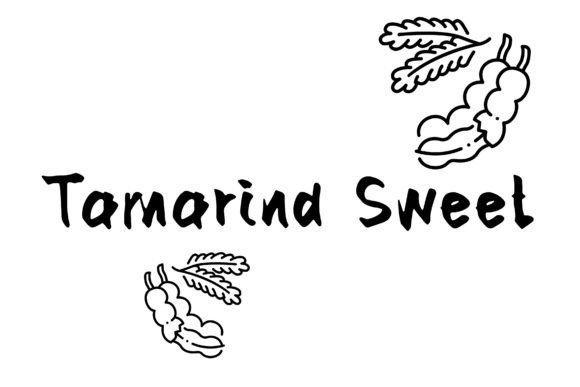
There’s something quietly powerful about handwriting — the slight tilt of letters, the gentle variation in stroke weight, the warmth that comes from imperfection. That human touch is exactly what Tamarind Sweet Font captures so effortlessly. Designed as a simple, friendly handwritten typeface, it doesn’t try to mimic calligraphy or ornate script. Instead, it offers approachable charm — soft curves, consistent rhythm, and just enough personality to feel personal without overwhelming your design.
Why Simplicity Works So Well in Modern Design
In an era saturated with bold display fonts and ultra-thin sans-serifs, simplicity stands out — not as minimalism for its own sake, but as clarity with character. Tamarind Sweet Font leans into this idea. Its lowercase ‘a’, ‘g’, and ‘y’ follow familiar handwritten forms, while uppercase letters maintain readability without stiffness. There are no exaggerated flourishes, no forced swashes, and no dramatic contrast between thick and thin strokes — just honest, legible shapes that breathe naturally on the page or screen.
This restraint makes Tamarind Sweet Font unusually versatile. You won’t find yourself second-guessing whether it fits a project. It works because it doesn’t shout — it invites. Whether you’re designing a birthday card for a friend, drafting an Instagram story for a small business, or laying out text for a ceramic mug, the font supports your message instead of competing with it.
Where Tamarind Sweet Font Fits Naturally
Not every font thrives across formats — some lose charm at small sizes; others look stiff when scaled up. Tamarind Sweet Font handles both ends of the spectrum gracefully. Here’s where it shines most:
- Greeting cards — Its relaxed rhythm pairs beautifully with watercolor backgrounds or minimalist layouts. Try pairing it with a clean sans-serif (like Montserrat or Inter) for the date or recipient name — the contrast feels intentional, not jarring.
- Social media graphics — On Instagram or Pinterest, where attention spans are measured in seconds, Tamarind Sweet Font adds warmth without sacrificing scannability. Use it for short quotes, product taglines, or event announcements — especially when targeting audiences who value authenticity over polish.
- Print-on-demand products — From tote bags to enamel pins, this font holds up well in vector-based production. Its open letterforms prevent ink bleed on fabric or ceramic surfaces, and its modest x-height ensures legibility even on curved mugs or narrow shirt tags.
- Small business branding — Cafés, florists, handmade soap makers, and independent bookshops often lean into tactile, human-centered aesthetics. Tamarind Sweet Font complements those values without feeling clichéd or overly nostalgic.
Real-World Use Cases You Can Try Today
Imagine you run a local plant shop and want to update your weekly newsletter. Instead of defaulting to a generic script font, try setting your seasonal tip — “Water your monstera deeply once a week, then let the top inch dry” — in Tamarind Sweet Font. The result feels like advice from a knowledgeable neighbor, not a corporate bot.
Or picture a teacher creating printable classroom posters. Using Tamarind Sweet Font for affirmations (“You’ve got this”, “Mistakes help us grow”) softens the tone and reinforces emotional safety — far more effectively than rigid block letters ever could.
Even digital interfaces benefit. Some designers use Tamarind Sweet Font sparingly in UI elements — like success messages (“Order confirmed! 🌟”) or onboarding tips — to add micro-moments of delight. Just keep it at 16–20px and pair it with a highly legible system font for body text.
What to Consider Before Choosing Tamarind Sweet Font
Like any tool, Tamarind Sweet Font excels within certain boundaries. Knowing those helps you use it more intentionally — and avoid missteps.
First, it’s not built for long-form reading. Don’t set a blog post or product description in it. Its charm lies in brevity — headlines, captions, short phrases. Think of it as your go-to for moments that need heart, not horsepower.
Second, check licensing early. While many versions of Tamarind Sweet Font are free for personal use, commercial projects — especially those involving merchandise or client work — often require a paid license. Always verify the source: reputable platforms like Creative Market or the designer’s official site will clarify usage rights clearly.
Third, consider language support. The standard version covers basic Latin characters (A–Z, a–z, numerals, common punctuation), which suits English, Spanish, French, and similar languages. If your project includes extended diacritics or non-Latin scripts, test thoroughly — or look for an expanded version if available.
Pairing Tamarind Sweet Font Thoughtfully
Great typography isn’t just about picking one standout font — it’s about how fonts converse. Tamarind Sweet Font plays especially well with clean, neutral companions. Think of it as the expressive voice in a duo:
- With geometric sans-serifs — Like Poppins or Nunito. Their balanced proportions ground Tamarind Sweet Font’s looseness, making layouts feel both warm and organized.
- With low-contrast serifs — Such as Lora or Merriweather. These offer subtle texture without competing visually, ideal for wedding stationery or literary-themed designs.
- With monospaced fonts (sparingly) — Try using a mono font like IBM Plex Mono for technical details (dates, times, addresses) beside Tamarind Sweet Font headlines. The juxtaposition feels modern and grounded.
Avoid pairing it with other handwritten or script fonts — unless you’re deliberately layering textures for artistic effect. In most cases, that creates visual noise rather than harmony.
Getting Started Without Overcomplicating Things
You don’t need design experience to use Tamarind Sweet Font well. Start small:
- Download the OTF or TTF file from a trusted source.
- Install it on your computer (double-click → “Install” on Mac/Windows).
- In Canva, Figma, or Adobe Express, search for “Tamarind Sweet” — it should appear in your font menu.
- Try it on a single line of text first: a quote, a name, a date. Adjust letter spacing slightly (+10–20 units) if it feels too tight.
Notice how it changes the mood. Does it feel friendlier? More inviting? Less formal? That’s the signal you’re on the right track.
And remember — consistency matters more than complexity. Using Tamarind Sweet Font across just two or three touchpoints (e.g., your Instagram bio + printable workshop handouts + email signature) builds recognition faster than scattering ten different fonts across your brand.
Final Thoughts: Warmth That Scales
Fonts shape how people feel before they even read a word. Tamarind Sweet Font delivers warmth at scale — whether you're printing fifty custom napkins for a baby shower or posting a single story to celebrate a customer milestone. It doesn’t demand attention. It earns trust.
Its strength isn’t in being flashy or technically advanced. It’s in being reliably kind — in form, function, and feeling. That’s why designers, educators, entrepreneurs, and hobbyists keep returning to it: because sometimes, the simplest handwritten font says the most.